Beyond the Skyline Hong Kongs Festivals Food and Local Voices
Updated: Jul 30
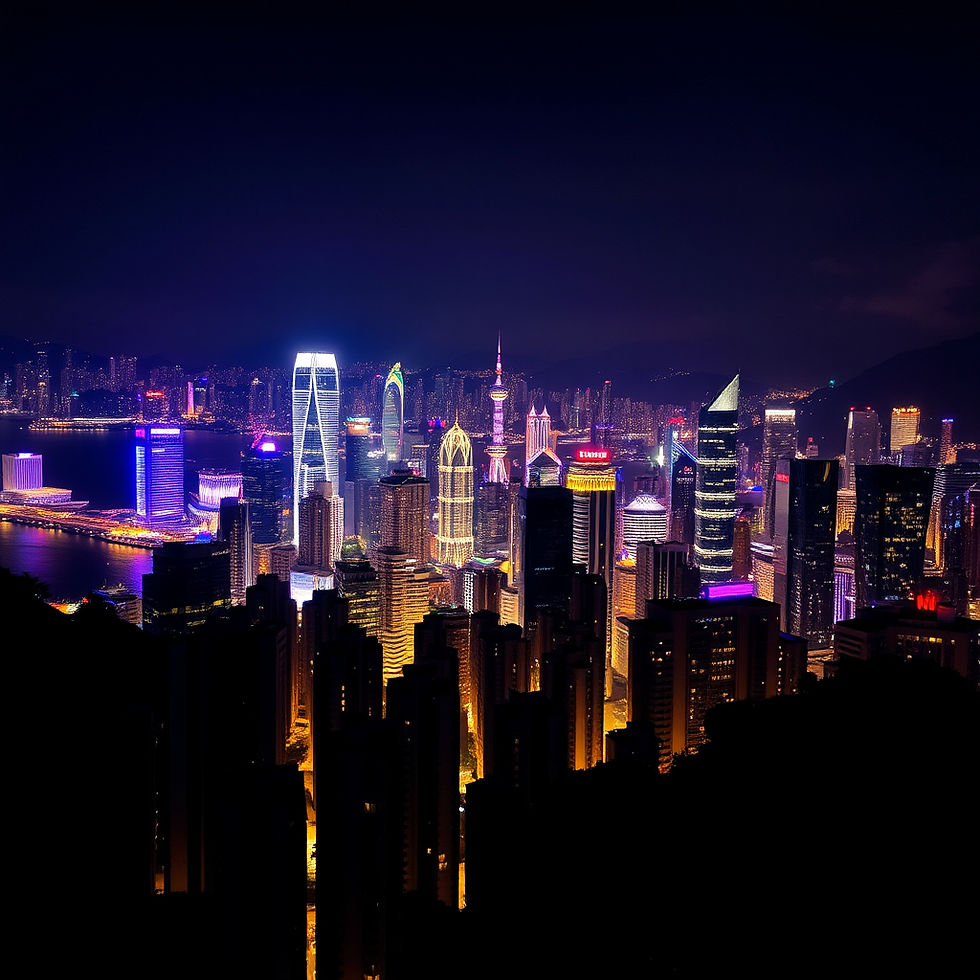
Hong Kong is often introduced through glass towers, harbor lights, and the clean arc of the Star Ferry crossing Victoria Harbour. Those images are real, but they are only the front page. The richer story sits closer to the ground: in temple courtyards hazy with incense, in cha chaan teng booths sticky with condensed milk, in wet markets where regulars know which stall cuts fish the way their family likes it.
To understand Hong Kong beyond the usual landmarks, look at how people gather, eat, pray, bargain, remember, and joke. Culture here is not sealed in museums. It lives in queues, festivals, street corners, public housing estates, market lanes, and family tables.
The local voices quoted in this article are presented as composite reflections based on common views shared by Hongkongers across neighborhoods and generations. They are included to capture everyday perspectives without treating any one person as a spokesperson for the city.

Festivals show how Hong Kong keeps time
Hong Kong moves fast, but its calendar still follows old rhythms. Festivals break through the pace of work and commuting. They bring people into streets, temples, waterfronts, and village spaces where tradition feels public and alive.
Lunar New Year is a season of visits and meaning
Lunar New Year in Hong Kong is more than red decorations and flower markets. It is a social reset. Families clean their homes, buy flowers, prepare sweets, and visit relatives. Children receive lai see, red packets that carry blessings as much as money. Shops close, reopen, and mark the new year with offerings or lion dances.
The flower markets, especially before the holiday, show how practical and symbolic the city can be at the same time. Mandarin orange plants, peach blossoms, orchids, and narcissus all carry meanings tied to luck, growth, and renewal. People do not always speak of these meanings in formal terms. They simply know what belongs in the home at that time of year.
“My mother says the flat feels wrong without flowers before New Year. Even if we are busy, we go out late to buy them. It is not decoration only. It is the feeling that the year has properly arrived.”
That feeling matters. In a city shaped by migration, dense living, and long work hours, festivals turn private families into public communities.
Tin Hau worship connects the city to the sea
Hong Kong is a port city, and its relationship with the sea runs deeper than trade. The goddess Tin Hau, protector of seafarers, still draws worshippers to temples across the territory. Tin Hau Festival, marked in many neighborhoods, includes processions, offerings, opera performances, and community meals.
Even people who do not think of themselves as strongly religious may visit temples during festival periods. They light incense for parents, children, exams, health, or safety. The act can be spiritual, cultural, or both.
In older fishing communities and coastal villages, Tin Hau celebrations remind people that Hong Kong was not always defined by finance and real estate. It was also built by boat people, dockworkers, fisher families, and migrants trying to make a life where land met water.
The Cheung Chau Bun Festival turns a small island into a stage
Cheung Chau’s Bun Festival is one of Hong Kong’s most distinctive cultural events. It is known for its bun towers, Taoist rituals, parades, lion dances, and the famous bun scrambling competition. The festival grew from local religious practice and community protection rituals, and it still centers on the island’s own identity.
The parade, with children dressed as legendary and contemporary figures, is playful and startling. It mixes folk belief, local humor, and social commentary. That mix is very Hong Kong: respect for tradition, paired with a quick eye for the present.
“People come for the bun tower, but for us it is also about the island. Everyone has a job. Someone prepares food, someone helps the children dress, someone watches the route. It makes Cheung Chau feel like one family for a few days.”

Food is Hong Kong’s everyday language
Hong Kong food culture is famous, but it is often reduced to checklists: dim sum, roast goose, egg tarts, wonton noodles. The deeper meaning lies in how food organizes time, relationships, and neighborhood life.
Yum cha is a way to stay connected
Yum cha literally means “drink tea,” though it usually means dim sum with tea. In Hong Kong, it is not just a meal. It is a social habit, especially across generations. Older relatives may arrive early. Younger relatives may appear later, sleepy and hungry. Trolleys in older-style restaurants have become less common than order sheets, but the rhythm remains.
Tea gets poured. Lids are tapped as thanks. Har gow, siu mai, char siu bao, rice rolls, and steamed beef balls arrive in bamboo baskets or small plates. Families talk over the table in Cantonese, English, Mandarin, or a mix. Some conversations are practical. Some are gossip. Some are quiet because everyone is eating.
Food becomes care when words are not enough. In many Hong Kong families, asking whether someone has eaten can carry the warmth of asking whether they are well.
A common Cantonese greeting, “Sik jor faan mei aa?” means, “Have you eaten yet?” It is simple, but it says a lot about how care is expressed.
Cha chaan teng culture grew from mixing worlds
The cha chaan teng, or Hong Kong-style tea restaurant, is one of the city’s great cultural inventions. Its menus can look chaotic at first: pineapple buns, macaroni soup with ham, scrambled egg sandwiches, baked pork chop rice, French toast, and strong milk tea.
That mix reflects Hong Kong’s layered history. British-style tea, local ingredients, Cantonese speed, neighborhood pricing, and working-class hunger all meet in one laminated menu. The result is not imitation Western food. It is Hong Kong food, shaped by adaptation.
“People laugh at macaroni soup, but I grew up eating it before school. It tastes like childhood. It tastes like someone needed to feed a lot of people quickly, and somehow it became comfort.”
Hong Kong-style milk tea carries the same story. It is strong, smooth, and often served with evaporated milk. Many shops guard their blends and brewing methods. The drink feels ordinary because it is everywhere, yet it speaks to craft and routine.
Dai pai dong meals keep street culture alive
Dai pai dong, the open-air cooked food stalls once common across Hong Kong, have become rarer. Where they remain, they offer more than wok hei and plastic stools. They preserve a direct style of eating that feels communal, loud, and unpolished in the best way.
People sit close. Dishes arrive fast. Steam rises from clams in black bean sauce, stir-fried greens, noodles, and seafood. The experience reminds diners that Hong Kong’s famous efficiency does not always mean silence or polish. It can also mean a cook, a wok, a flame, and a table full of strangers eating shoulder to shoulder.
Wet markets still hold neighborhood knowledge
Supermarkets are convenient, but wet markets remain key to local food life. Shoppers choose vegetables by touch, ask fishmongers for advice, and build loyalties over years. A market is also a news network. People hear which fruit is good, which restaurant changed hands, which elder has been unwell.
“At the market, the auntie knows I cook for two. She will not let me buy too much. She says, ‘This is enough, come back tomorrow.’ That is service, but it is also relationship.”
This is where Hong Kong’s density becomes human. The city is crowded, yes, but repeated contact can turn crowding into familiarity.

Community practices shape the city block by block
Culture in Hong Kong is not only what happens during festivals or meals. It also appears in small shared practices that help people live close together.
Temple visits blend belief, memory, and routine
Temples in Hong Kong can sit beside highways, apartment towers, wet markets, and shopping streets. Wong Tai Sin Temple is well known, but smaller neighborhood temples often reveal more about everyday life. People visit before exams, after illness, during festival periods, or when family matters feel heavy.
The practice of burning incense, making offerings, and drawing fortune sticks connects people to older systems of meaning. For some, it is faith. For others, it is respect for parents and grandparents. For many, it is both.
Temples also carry community memory. Their plaques, altars, and festival committees show how groups organized before modern public life took its current form.
Public estates are more than housing
Hong Kong’s public housing estates are home to many residents and generations of memory. Their courtyards, shops, cooked food centers, playgrounds, and sitting areas create daily social worlds. Elderly residents gather on benches. Children play after school. Neighbors share warnings about weather, lifts, repairs, and food deals.
To outsiders, high-density housing can look impersonal. Inside, it often runs on recognition. People may not know every name, but they know faces, habits, and routines.
During typhoons or extreme heat, these routines matter. Neighbors check whether older residents have supplies. Shopkeepers know who usually comes by and who has not appeared. Community can be quiet and practical.
Mahjong, parks, and morning exercises keep social life visible
In parks and public spaces, especially in the morning, people stretch, practice tai chi, walk, sing, or meet friends. Mahjong clubs and family games carry another kind of social rhythm. The sound of tiles can signal leisure, strategy, memory, and connection.
These activities are not tourist spectacles. They are ways of using limited space well. Hong Kong’s apartments are often small, so public space becomes an extension of home. A park bench, cooked food center, or estate courtyard can serve as a living room.
Language carries Hong Kong’s humor and identity
Cantonese is central to Hong Kong culture. Its slang, rhythm, jokes, and layered tones shape how people express affection, irritation, speed, and wit. English and Mandarin also play roles, but Cantonese gives much of local life its texture.
Hong Kong speech often shifts between languages. A sentence may include Cantonese, English words, and local slang without anyone pausing to explain. This mix reflects the city’s history, education system, media, and global connections.
Common phrases reveal values. “Add oil,” a Hong Kong English expression from the Cantonese “ga yau,” means to keep going or give encouragement. It is heard at races, exams, protests, family tables, and casual conversations. It is short, practical, and emotionally direct.
“When someone says ‘add oil,’ it can be serious or funny. It means, ‘I see you trying.’ Hong Kong people do not always say big emotional things, but we have our ways.”
That restraint is part of the culture too. Caring can appear as food placed in a bowl, a warning to bring an umbrella, a seat saved at yum cha, or a message during a storm.

Hong Kong identity is built from movement and memory
Hong Kong culture is often described through contrast: East and West, old and new, local and global. Those contrasts are real, but they can sound too neat. The city’s identity is less like a set of opposites and more like a habit of making things work under pressure.
A cha chaan teng menu works because people adapted foreign ingredients to local needs. A festival procession works because old rituals absorb modern humor. A wet market works because trust balances speed. A public estate works because private lives spill into shared space.
Hong Kong identity has been shaped by Cantonese heritage, migration from mainland China, British colonial history, regional trade, global finance, and the constant pressure of limited land. Yet identity is not only history. It is what people repeat every day.
The city’s cultural strength lies in these repetitions:
Families still gather for festival meals, even when schedules are hard.
Shopkeepers still remember regulars, even in a city known for speed.
Elders still teach children how to pour tea, offer incense, and greet relatives.
Neighborhoods still mark time through food, worship, weather, and school terms.
These habits are not frozen traditions. They change. Young Hongkongers reinterpret festivals, revive old cafes, document disappearing shops, and move between local and global culture with ease. The city’s memory survives because people keep using it.
How to experience local culture with respect
Seeing this side of Hong Kong does not require special access. It asks for patience, curiosity, and good manners.
A few simple practices help:
Visit neighborhood markets in the morning
Watch how people choose produce and speak with stallholders. Buy something small if it feels appropriate.
Eat where routines are visible
Try a cha chaan teng, a cooked food center, or a dim sum restaurant with local families. Do not rush the meal.
Attend festivals as a guest, not a director
Keep a respectful distance during rituals. Ask before taking close-up photos of people, especially children or worshippers.
Learn a few Cantonese phrases
Even simple words like “m goi” for “thank you” or “excuse me” can change the tone of an exchange.
Look up, but also look around
The skyline is beautiful, but culture often sits at eye level: handwritten menus, incense coils, market baskets, tiled floors, and regular customers nodding to staff.
Hong Kong rewards attention. The more closely one looks, the less the city feels like a quick stopover and the more it appears as a place of deep local knowledge.
The skyline may be the image that travels furthest, but the city’s real character lives in the practices people protect: the tea poured before a meal, the flower carried home before Lunar New Year, the incense lit for a parent, the market stall greeting a regular, the phrase “add oil” offered when someone needs courage.
To appreciate Hong Kong fully, follow those small acts. They tell the story behind the lights.


Comments